Summary :
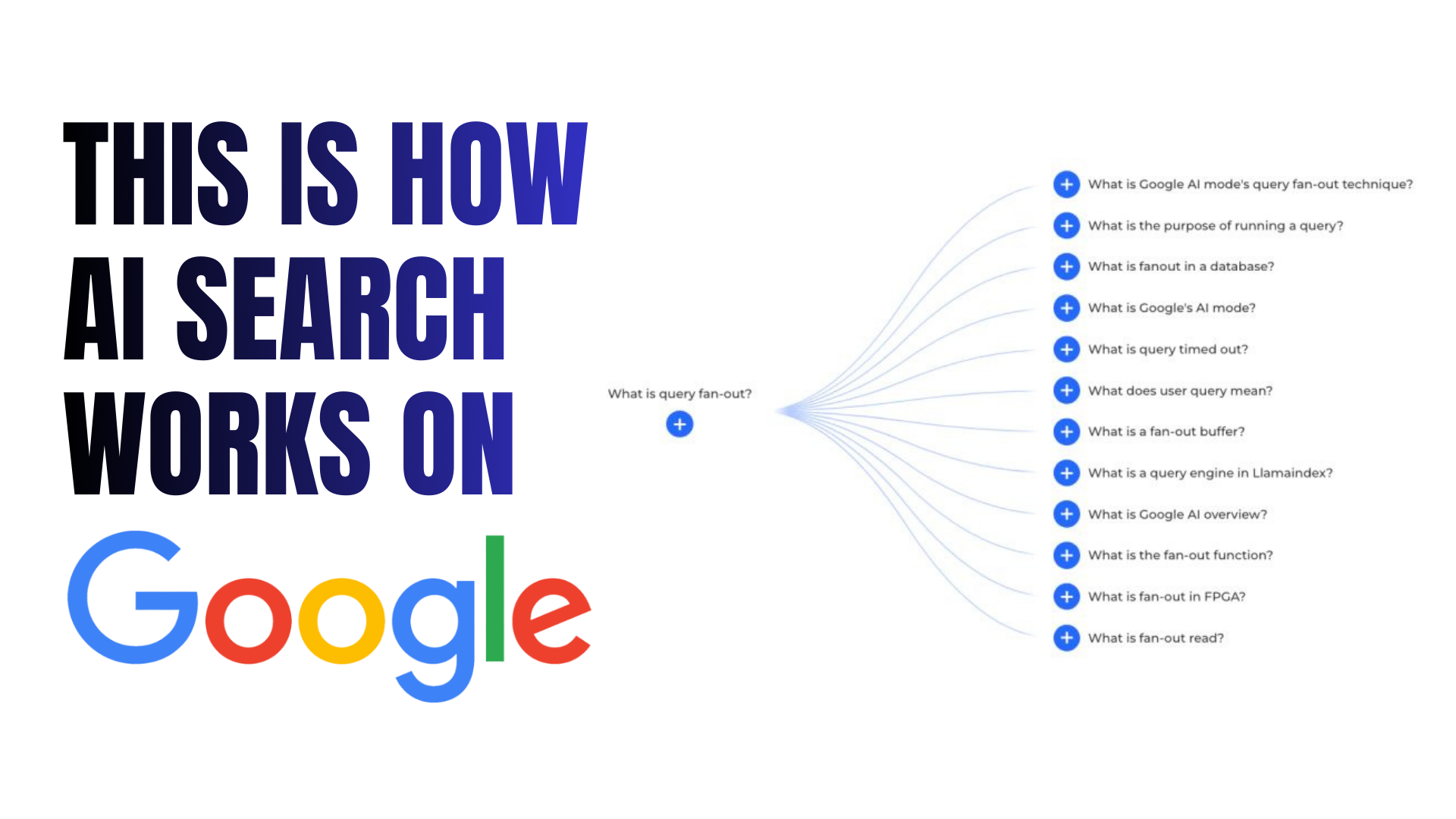
Google’s Query Fan-out technique decomposes complex prompts into multiple sub-queries to provide multi-faceted answers, shifting the SEO focus from keyword ranking to total Topical Authority.
Table of Contents
We all know how traditional Google Search works. Now you must be aware by now of Google’s AI mode and AI Overview.
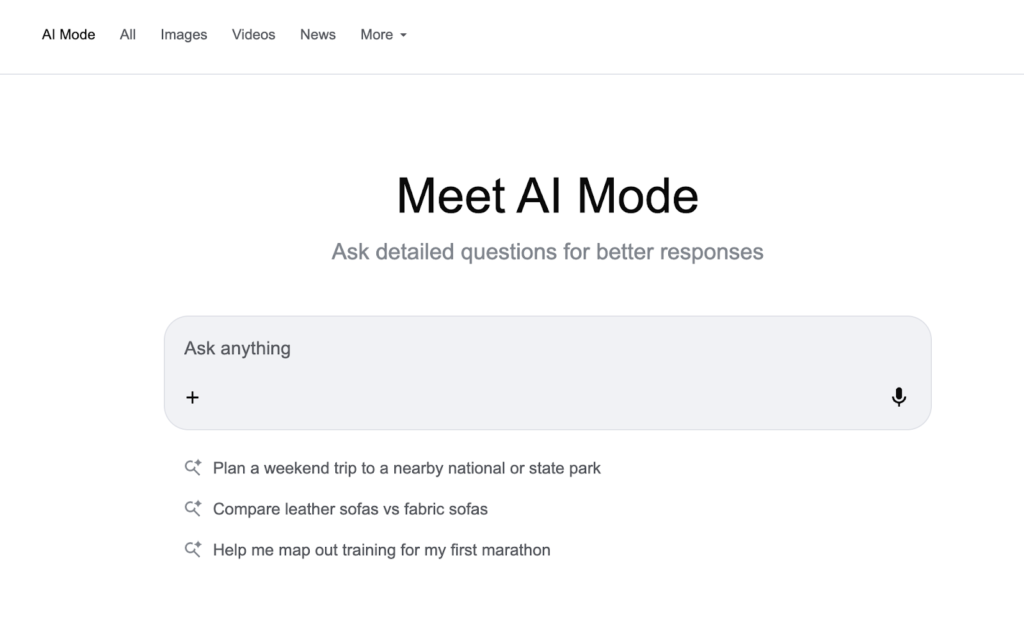
When it comes to AI mode, Google does something interesting. Since most of the queries (aka prompts) are long questions, Google splits the question into multiple queries and runs them in parallel to get a clearer idea on how to answer the query. This is called “Query Fan-out technique”.
Which queries need a Query Fan-Out
Google understands that for some queries like “What is the temperature in NY right now?” doesn’t require a query fanout. However, questions like “which lens is best for sunset photography in Bangalore?” requires more research and hence requires Google to “fan-out” more sub-queries to research and give a better answer.
Google explains this in their blog:
“Under the hood, AI Mode uses our query fan-out technique, breaking down your question into subtopics and issuing a multitude of queries simultaneously on your behalf. This enables Search to dive deeper into the web than a traditional search on Google, helping you discover even more of what the web has to offer and find incredible, hyper-relevant content that matches your question.”
Source: Google
This means for some deep research questions, your query will fan-out into hundreds of queries across all types of search results (Not just web search, but also local packs, images, videos, knowledge graphs etc.)
Here is Google explaining Query Fan-Out in their I/O Keynote:
Query Fan-out Example
Let’s take an example of a query fan-out. Let’s say you are putting the below query on AI mode:
“I have to do a science project for my Xth grade school assignment. The theme of the project is Space. What projects can I build with simple household objects in under 2 days?”
Here is how the query output showed up for me:
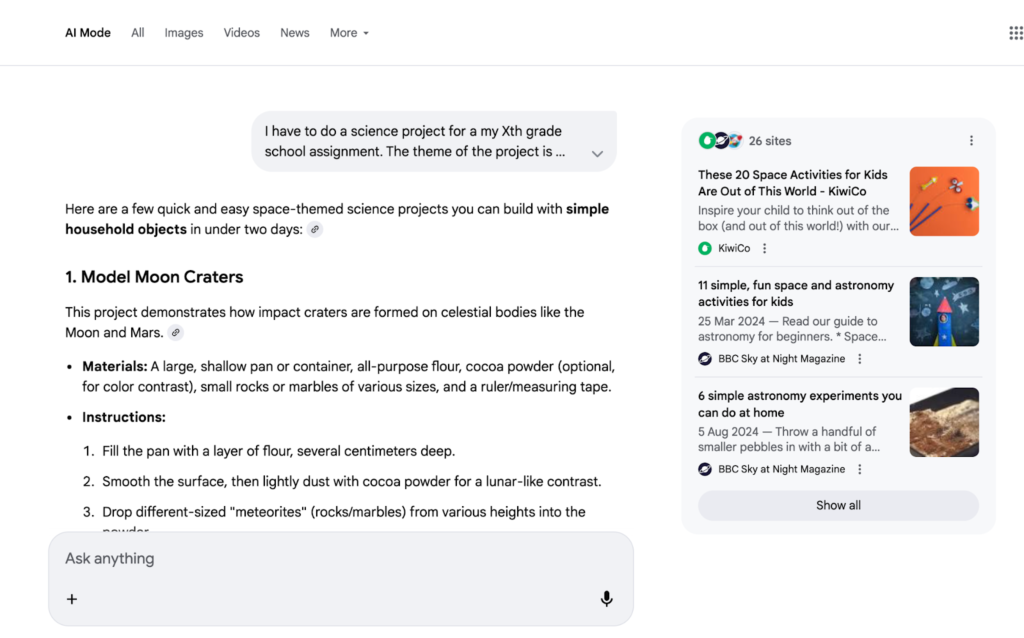
Now, my query had many facets to it:
1. Science project for Xth grade for Space theme.
2. School science project around space with household objects.
3. School project that can be made in 2 days.
At a basic level, my single query will get split into at least 3 sub-queries as above and the results would then be processed by the AI-engine to deliver a set of clear list of projects I can look at doing.
But, in reality Google’s AI mode goes beyond this. Google also tries to guess the related follow up questions that I may ask and it searches for them in the query fan-out. So, when I asked a follow up question about how much time the project would take, it answered that instantly.
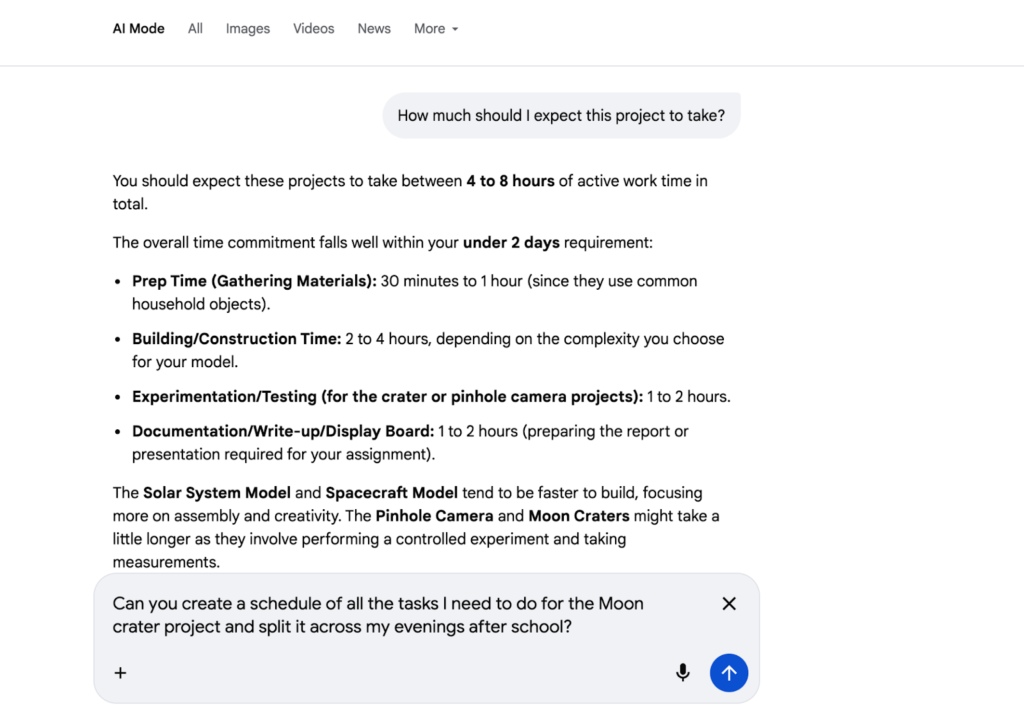
In some cases, you will notice it searching again on the internet to gather more information. It just means that the particular query was not part of the related follow up questions.
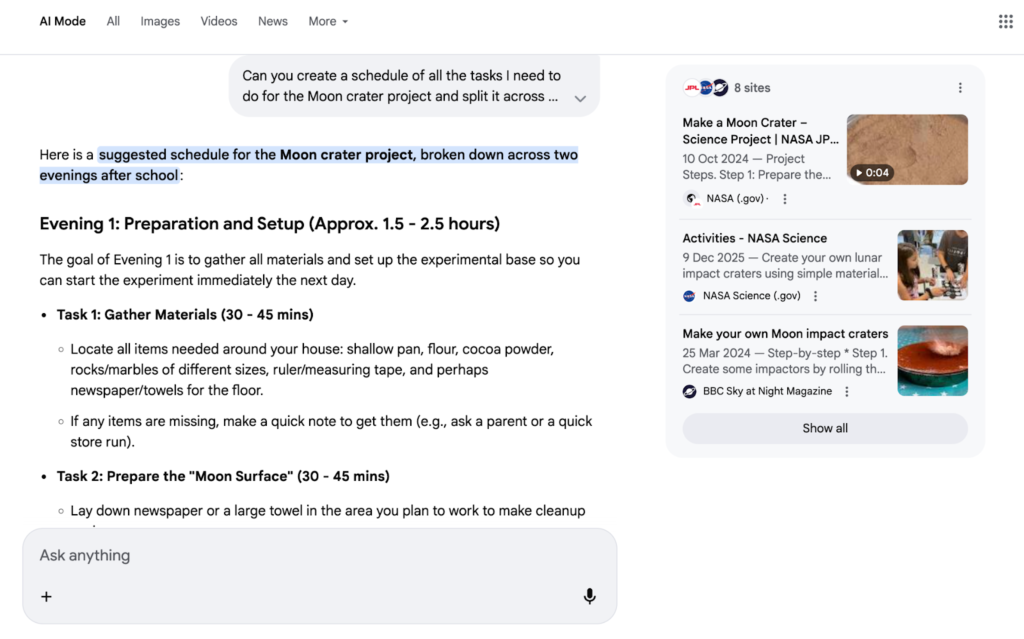
For eg., when I followed up by asking Google to create a schedule for me, it had to query again and provide an answer. You can see that it gave me new links around this 3rd question.
Implications for a Marketer
This change has many implications for the marketer. It means we are now slowly moving away from KW-based ranking to Topical authority based domination.
Imagine if you are a business with a blog about School science projects. Ideally, you should now aim to dominate every sub-query in the query fan-out. That’s the ideal.
In essence, when it comes to SEO – think less about KW Authority and more about Topical Authority.
Aleyda Solis has written a good blog around this topic of Query Fan-Out. Worth reading.
Hope this helps.
Shyam
Video explainer